
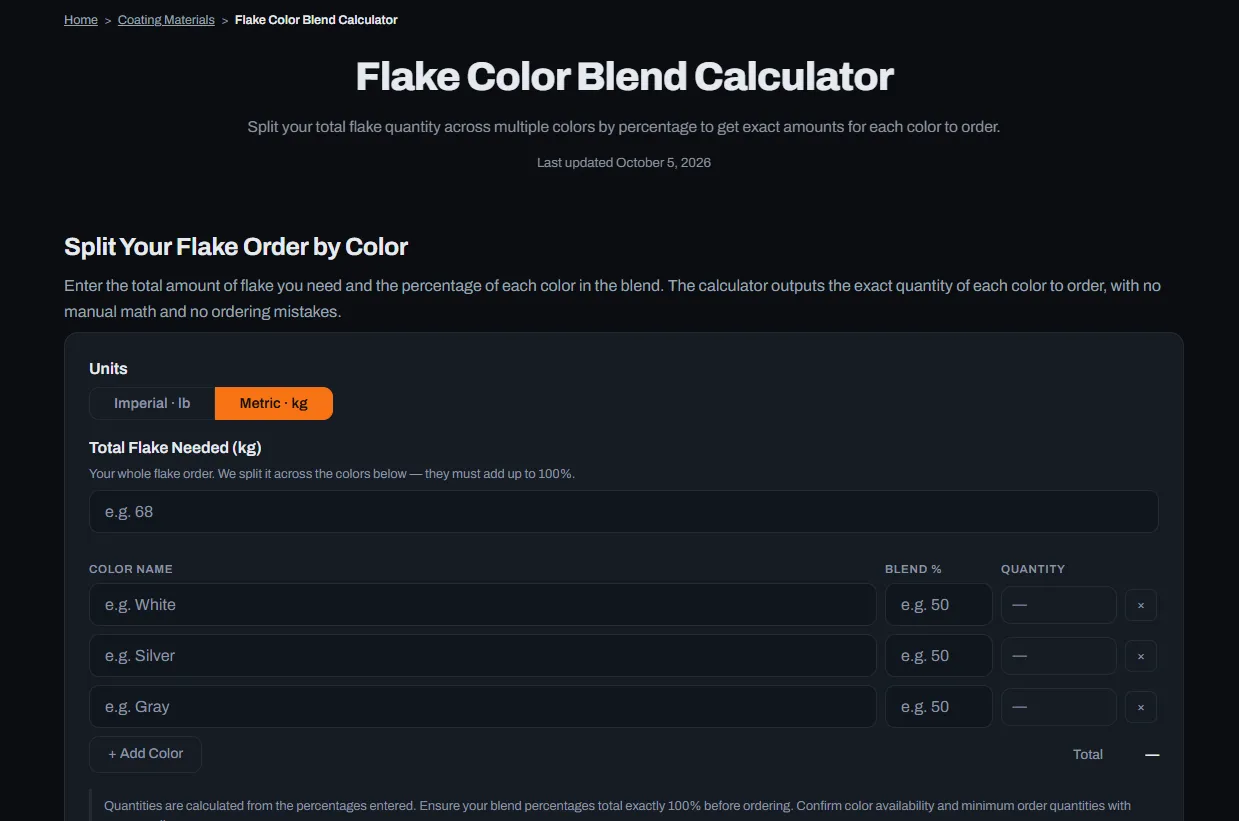
Decorative flake flooring can transform plain concrete into an attractive, durable surface, but successful installations depend on more than color selection. Contractors must calculate how much material a project requires and how each color contributes to the final blend. A flake color blend calculator can help divide a known total quantity into the required proportions. This makes purchasing more systematic and simplifies future color matching. Understanding the relationship between floor area, broadcast rate and blend percentages is essential for planning decorative projects without unnecessary waste.
Start With the Required Coverage Area
Before choosing decorative flakes, contractors should establish the actual surface area to be coated. Measurements must account for irregular room shapes, additional sections and areas excluded from installation. Using estimated dimensions without verification can create material shortages. Existing floor conditions may also affect the installation approach and required coating quantities. Once the area is established, contractors can compare it with the manufacturer’s recommended coverage rates. Accurate measurement provides the foundation for all later calculations and helps ensure that material orders reflect the project rather than assumptions.
Understand Different Decorative Broadcast Methods
Flake coverage depends on the intended finish. A light broadcast uses relatively small quantities to provide decorative accents, while a full broadcast creates a dense layer of flakes across the coating. These methods produce different appearances and require different material quantities. Contractors should select the broadcast method before estimating purchases. Manufacturer recommendations and practical installation requirements remain important because flake size and application technique influence consumption. Agreeing on the desired finish with the client also helps prevent misunderstandings about color density and surface texture after installation.
Calculate Material Quantities Before Mixing Colors
A flake broadcast calculator can assist with estimating the total amount of decorative flake required for a selected area and application rate. This quantity should be established before dividing the order into individual colors. Otherwise, contractors risk calculating percentages against an inaccurate starting figure. Appropriate allowances may be required for waste, handling or future repairs. The calculated result should also be compared with available packaging sizes. This method makes material purchasing more predictable and reduces the chance of interruptions during installation.
Develop Color Ratios That Add Up
Custom blends often combine neutral and accent colors to achieve a particular visual effect. For example, a design using 50 percent white, 30 percent grey and 20 percent charcoal totals 100 percent. If the total material requirement is 40 kilograms, the quantities become 20, 12 and 8 kilograms respectively. Percentages that exceed or fall below 100 create ordering inconsistencies. Contractors should record the approved ratio before purchasing. Clear documentation also makes it easier to reproduce the blend when additional areas are coated later.
Account for Supplier Packaging Restrictions
Calculated quantities do not always match the packaging options available from suppliers. A project may require only a few kilograms of an accent color, while the supplier sells that material in larger containers. Contractors should confirm minimum purchase quantities before finalizing the design. Adjusting the blend may be more economical than buying excessive material that cannot be used elsewhere. However, any changes should be approved before ordering. Understanding packaging restrictions early helps establish realistic costs and prevents unexpected substitutions from affecting the finished decorative appearance.
Keep Material Batches Consistent During Installation
An accurate blend calculation is only useful when the specified proportions are maintained on site. Contractors should organize materials before broadcasting and follow a consistent process for combining colors. Mixing small batches independently without careful measurement can create visible differences between installation sections. Where practical, preparing enough blended material for the project can reduce variation. Storage conditions and material handling should also follow supplier recommendations. Good coordination between mixing and broadcasting teams helps preserve the intended design while keeping the application process organized.
Record Blend Information for Future Repairs
Decorative flooring may occasionally require localized repairs, particularly in areas exposed to impacts or repeated equipment movement. Matching an existing finish becomes more difficult when the original color proportions are unknown. Contractors should retain the blend recipe, product names, flake sizes and relevant batch information in project records. Photographs can provide additional reference, although lighting may change perceived colors. Complete documentation helps estimate future material requirements and supports more consistent repairs. It also provides clients with useful information for later renovations or extensions.
Conclusion
Consistent decorative results depend on accurate measurement, sensible material allowances and disciplined color control. Planning the complete flake requirement before calculating individual color quantities helps reduce purchasing mistakes and supports repeatable finishes. Flooring professionals can explore specialized calculation resources through tradeepoxy.com, including tools for estimating broadcast quantities and custom color combinations. Recording approved blends and checking supplier packaging before installation provides another layer of control. A structured planning process allows contractors to focus more attention on application quality and less on unexpected material shortages.